Tu pedido

No disponible temporalmente
Disponibilidad sujeta a la información del editor
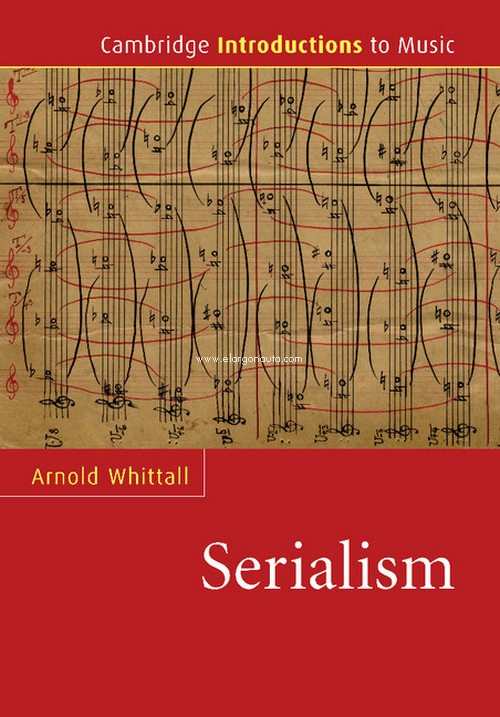
From the earliest years of the 20th century composers sought ways in which to break from earlier musical traditions. Serialism is one of the most prominent innovations resulting from this. From Schoenberg to Stockhausen, Berg to Boulez, this introduction tells the story of how serialism emerged, and provides a basic outline of serial compositional techniques.
Introduces serialism ? a traditionally complex but key area of music studies ? in a thorough and straightforward way.
Clearly and concisely describes the technical aspects of serialism, using illustrative music examples.
Contains a glossary to aid readers unfamiliar with specialised vocabulary.
Demonstrates how serial compositional technique relates to wider cultural and musical events.
Describes the technical aspects of serialism in a clear and straightforward way, and includes a glossary to aid readers unfamiliar with specialised vocabulary.
Documents and concisely explains the most important comments by key composers and music theorists
CONTENIDO
Preface
1. Introducing the Introduction
-Some initial questions
-History and hindsight: an overview
-A Webern analysis
-Collection, mode, series, set
-Notes and numbers
-Back to Webern
-Forms of post-tonal composition
-Terms, techniques
-Serialism in critical perspective
-A personal perspective
2. Schoenberg?s path to the twelve-tone method
-Interpreting transition
-Tonal or post-tonal?
-Twelve-tone technique in embryo
-Ideals and practicalities
-Post-war problems
-Parallels and pitfalls: Hauer
-Eye witness: Gerhard
3. Serialism in close-up
-From Bach to Schoenberg
-Schoenberg as music
-Serialism as music
-Fixed and free
-Op. 25: further details
-A twelve-tone canon
-Coda
4. Schoenberg in the 1920s
-1920-3
-Making, meaning: Op. 23, No. 5
-1923-4
-Schoenberg on Schoenberg: the Wind Quartet
-More on the Wind Quartet
-The Wind Quartet's finale
-1925-9
-Op. 29 and after
-Meaning, making
5. Alban Berg. Reverence and resistance
-"Wozzeck" and transition
-Personal space
-Berg-Klein-Berg
-Berg's Chamber Concerto
-A first step
-Series, cycles
-"Lyric Suite"
-"Lyric Suite": finale
-The final dialogues
-Serialism in "Lulu" and the Violin Concerto
6. Anton Webern. Discipline and license
-Purity, anxiety
-Beginnings
-The route to independence
-String Trio, Op. 20
-The method perfected
-Form and feeling
-Symmetry and balance
-Twelve-tone canons
7. The later Schoenberg
-Laying down the law
-Religion, politics and serialism
-Exile and readjustment
-'Good old tradition!'? The Fourth String Quartet
-Models for form and style
-Suspended tonality?
-Grammar or gribberish?
-Matters of quality
-Ambiguous endings
8. American counterpoints I
-From method to system
-Varèse
-More pioneers
-Krenek
-Sessions, Copland, Perle
-Babbit: words
-Babbit: music
-Babbit: music, words and politics
-Consequences and contingencies
9. American counterpoints II
-Stravinsky: a balance of tensions
-Stravinsky: series and centres
-Cage and Nancarrow
-The Minimalists
-The serial inheritance
-Carter
-Carter's practice
-"Gra": playing with sets
10. European repercussions I
-Facing both ways
-Britten and the British
-Shostakovich and the Soviets
-Lutoslawski and the Poles
-Cold War and style wars: Dallapiccola
-Nono: commitment to progress
-Nono: "Il canto sospeso"
11. European repercussions II
-From Messiaen to Boulez
-Testing extremes
-"Structures"
-Hearing techniques
-Behind "Le Marteau sans maître"
-Serialism in "Le Marteau sans maître"
-Stockhausen: Cologne, Paris, Darmstadt
-Stockhausen and the piano
-"Gruppen"
12. European repercussions III
-Xenakis
-Ligeti
-Ligeti's techniques
-Berio
-Berio's transformations
-Kagel
13. European repercussions IV
-The later Boulez
-Boulez as lecturer
-Style and idea in "Incises"
-The later Stockhausen
-Serialism "in excelsis"
-Kurtág
14. European repercussions V
-The contemporary scene
-Scandinavia: Norgard
-British serialism after 1950
-Maxwell Davies: before 1970
-Magic squares and serial structures
-Maxwell Davies since the 1970s
-From Manchester to Cambridge
-Birtwistle
-Ferneyhough
-Knussen
-An ending
Notes
Bibliography
Glossary
Index




Disponible en breve
Sin stock. Si se pide hoy, se estima recibir en la librería el 01/09/26¡GASTOS DE ENVÍO GRATIS!
Disponible en breve
Sin stock. Si se pide hoy, se estima recibir en la librería el 01/09/26¡GASTOS DE ENVÍO GRATIS!
Impresión bajo demanda
Disponibilidad sujeta a la información del editor¡GASTOS DE ENVÍO GRATIS!

Bajo pedido
Sin stock. Si se pide hoy, se estima recibir en la librería el 09/09/26¡GASTOS DE ENVÍO GRATIS!